
Introduction: Luxury Homes, Not Just “Golf Sim Rooms”
Luxury home indoor golf simulator rooms are redefining the modern estate. This guide is for luxury homeowners, architects, and builders interested in creating high-end indoor golf simulator rooms. We cover design, technology, installation, and value considerations for luxury home golf simulator rooms.
Luxury homes are often situated in the top 10% of their local market. These residences frequently feature dedicated spaces for indoor golf simulators, confirming their relevance for users seeking the ultimate in-home golf experience.
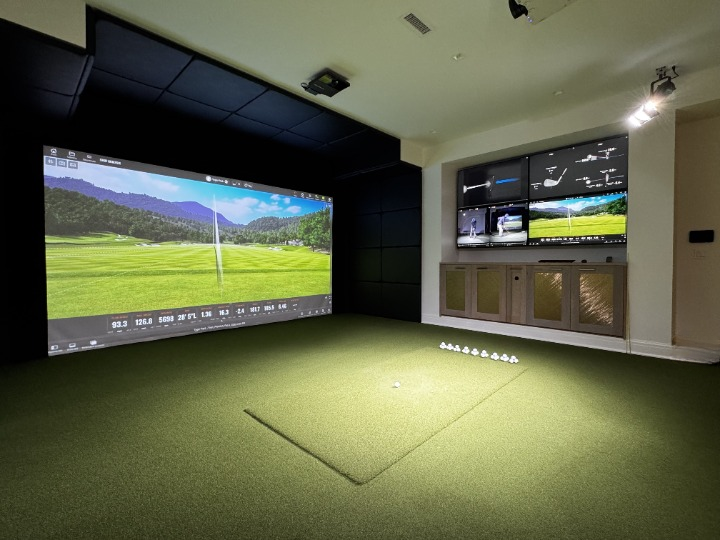
Picture a 2026 Dallas estate at 6 a.m.: the homeowner steps into a softly lit room with walnut millwork, ceiling-mounted Trackman iO, and a 160-inch impact screen that reads like intentional architecture rather than gym equipment. By 7 a.m., they’ve completed thirty minutes of focused practice, reviewed their club and ball data, and are ready for the day—all without leaving home. This room isn’t a bonus space gathering dust. It’s the most active room in the house.
A home golf simulator is quickly becoming a centerpiece of modern luxury homes, offering a personalized indoor golf experience that blends seamlessly with high-end residential design.
Affluent homeowners and their architects are moving beyond basic golf simulators toward fully integrated, interior-designed golf environments. The shift reflects a broader change in how luxury homes function: every square foot must earn its place. High-performance luxury homes now include advanced air and water filtration systems, prioritize the finest materials for longevity and aesthetics, and are increasingly adopting energy-efficient technologies like solar power as the gold standard for luxury investments. A golf simulator room that looks like it was retrofitted into a basement corner fails that test. A room designed with the same rigor as a primary kitchen or spa-quality bathroom passes it.
Wellness-focused design in luxury homes extends beyond spa-quality bathrooms to include dedicated fitness rooms and other wellness amenities, ensuring a holistic approach to health and relaxation.
Installing a golf simulator can enhance the entertainment value of a luxury home, making it a sought-after feature for both homeowners and guests. Golf simulators also provide year-round practice and game improvement opportunities, regardless of weather conditions.
Design2Golf specializes in bespoke indoor golf simulator rooms for luxury residences across the United States. This isn’t about selling off-the-shelf simulator packages or acting as an equipment reseller. D2G designs, builds, and installs custom spaces where architecture, interior design, acoustics, lighting, and technology converge into a single cohesive experience.
Why does this matter for luxury homeowners, architects, and builders? Because the difference between a functional simulator and a genuine lifestyle amenity lies in the detail. The ceiling height that accommodates a full swing. The acoustic treatment that keeps the rest of the house peaceful. The wall protection that coordinates with the designer’s color story. The automation that makes everything work with a single tap. Luxury homes now include smart home automation systems that control lighting, security, and climate, further elevating convenience and comfort. These homes often feature dedicated spaces not found in standard housing, such as infrared saunas and wine cellars. These details determine whether a golf room becomes the family’s favorite gathering space or an expensive novelty that sees occasional use.
Why Luxury Homeowners Want a Golf Simulator Room in 2026
Year-Round Play and Convenience
Year-round play and relentless professional schedules drive demand for private, on-demand golf spaces at home. Weather no longer matters. Tee time availability no longer matters. The commute to the club no longer matters. When access to practice lives inside your own property, the friction disappears.
Luxury homeowners in New York, Boston, Long Island, Greenwich, Austin, Houston, Dallas, Naples, Manhattan and Miami are using simulator rooms as daily retreats. These spaces serve triple duty: morning practice before business calls, evening entertainment with friends, and weekend hosting for family or clients. One Greenwich client described it this way: “I used to block two hours for a round at the club. Now I get better practice in forty-five minutes without changing out of my house shoes.” D2G has helped countless customers realize their vision for a personalized home golf simulator room, customizing every detail to meet individual needs and preferences.
Privacy and Control
The appeal over joining another private club is substantial. Privacy means playing in your preferred attire, at your preferred hours, with your preferred music or silence. Control means no waiting for a tee time, no pace-of-play frustration, no interaction with other members when you simply want focused practice. The ability to hit balls at 6 a.m. or 11 p.m. without leaving home transforms a hobby into a sustainable daily habit.
Multi-Use Entertainment Spaces
Many clients combine golf with cinema, gaming, and sports viewing, making the simulator room the home’s most active entertainment space. The same projection screen that displays Trackman’s ball data doubles as a 4K cinema display. The same distributed audio system that provides subtle course ambiance shifts to immersive surround sound for Sunday football. Golfers in the family get their practice; teenagers get their gaming; everyone gathers for major sporting events.
Safety and Installation
When installing a golf simulator, stylishly protecting your walls and ceiling is essential to prevent damage from errant shots. A golf simulator’s wall and ceiling protection is a primary safety feature designed to stop the vast majority of shots. Professional installation services are available for those who prefer a hands-off experience, while a typical DIY installation generally takes between 2 to 5 hours.
Value and Market Appeal
A properly designed simulator room can add perceived value to a luxury home and set it apart in competitive markets. In the Hamptons, South Florida, and other high-end regions, distinctive amenities command attention from buyers. A golf room that reads as intentional architecture, not a technical afterthought, signals that the entire property was built with precision and care. D2G guarantees satisfaction and is committed to bringing each client’s vision to life through expert design, craftsmanship, and support.
Transitioning from the reasons luxury homeowners desire these spaces, let’s explore what truly distinguishes a luxury golf room from a standard setup.
Beyond the Launch Monitor: What Makes a “Luxury” Golf Room
The launch monitor measures your club and ball information. The primary difference between lower-end and high-end golf simulators is the launch monitor’s level of precision and software experience. But technology alone doesn’t create a luxury space. Contrast a basic DIY simulator bay—black netting, an exposed projector, and mismatched flooring—with a fully realized room where architecture, acoustics, lighting, and finishes were planned together from day one. The difference is immediately apparent and profoundly affects both usability and the room’s integration with the rest of the home.
Proportioned Architecture
Core elements define a true luxury simulator room. Proportioned room dimensions ensure comfortable swing execution without psychological constraint from nearby walls. Ceiling heights of 9’6 to 11 feet (or higher) accommodate overhead equipment mounts and tall golfers. Sightlines from adjacent spaces—hallways, bar areas, or lounges—can be designed for visual connection or deliberate privacy, depending on the homeowner’s preference. Luxury homes typically offer significantly higher levels of privacy, security, and space compared to traditional homes, further elevating the experience of a dedicated golf room.
Interior Design Integration
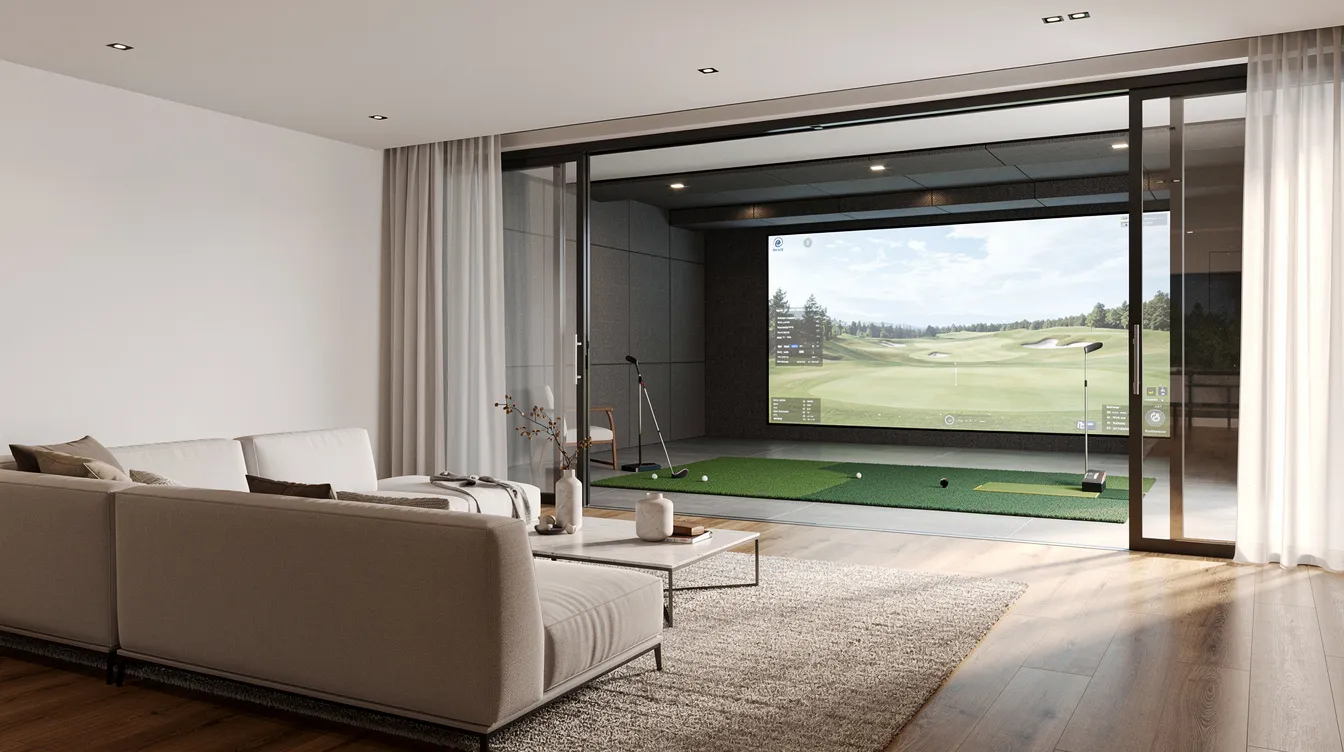
Interior design transforms a functional space into one that feels like it belongs. Wall treatments coordinate with the home’s broader aesthetic, whether modern, transitional, or classic. Custom millwork frames the impact screen in the same wood species used elsewhere in the residence. Concealed storage for clubs, shoes, and accessories keeps the room organized without visible clutter. Bar or lounge zones with designer furniture encourage guests to linger. Seamless indoor-outdoor integration, such as retractable glass walls, enhances the luxury experience by connecting the golf room to exterior living spaces and natural surroundings. Incorporating biophilic design elements not only strengthens this connection to nature but also improves air quality, contributing to a healthier and more inviting environment.
Custom Wall and Ceiling Systems
D2G’s U.S.Based hand-made wall and ceiling protection solutions can be color-matched or patterned to coordinate with materials chosen by the interior designer. This means the protective surfaces, which are always visible and occupy significant wall area, become deliberate design elements rather than visual liabilities. Upholstered acoustic panels, integrated LED lighting, and finishes that echo the home’s palette ensure the golf room reads as curated interior architecture.
Invisible Technology
Luxury also includes ease of use. One-touch automation powers the launch monitor, adjusts lighting, closes shades, and sets the audio/visual experience to optimal conditions. Advanced lighting systems in luxury golf rooms allow for precise control of brightness, color, and saturation, letting homeowners set the mood or enhance simulator image clarity for the best possible experience. Intuitive control means no fumbling with multiple remotes or apps. Quiet HVAC prevents mechanical noise from intruding on the experience. Seamless tech “disappears” into the room: ceiling-mounted Trackman units, concealed wiring, and integrated systems ensure the focus remains on the game, not the gadgets.
With these luxury features in mind, the next section details how Design2Golf brings custom indoor golf environments to life for discerning homeowners.
Design2Golf: Custom Indoor Golf Environments for Luxury Homes
Design2Golf operates as a national designer-installer focused on high-end residential and boutique commercial golf environments. Luxury homes are often situated in the top 10% of their local market, and D2G specializes in creating custom home golf simulator rooms tailored for these exclusive residences. D2G is not a generic equipment reseller. The firm designs and builds custom spaces where every element, from ceiling architecture to projector mounting to wall protection, is engineered for the specific room and the specific client.
D2G serves markets including Manhattan and Brooklyn, the Hamptons and Long Island, Fairfield County CT, Austin, Houston, Dallas, Naples, Miami, and other affluent regions where discerning homeowners expect precision and craftsmanship. Each market presents distinct challenges: constrained ceiling heights in pre-war Manhattan townhouses, acoustic isolation requirements in shared-wall buildings, coastal aesthetics in South Florida, and expansive new-construction footprints in Texas Hill Country.
Approximately 70 percent of D2G clients choose Trackman, making Design2Golf one of the largest independent Trackman installers in the country. But D2G also integrates Foresight, Uneekor, TruGolf, and other launch monitors when those better suit the space. Some rooms have ceiling height constraints that favor one system over another. Some clients prioritize multi-sport capability. The firm’s recommendation process begins with space assessment and client goals, not with a predetermined equipment sale.
D2G’s differentiators include:
- Architectural coordination with the project team
- Interior design collaboration on materials and finishes
- U.S.made wall and ceiling protection systems that can be customized in color and texture
- Proprietary AV integration that unifies launch monitor output with cinema and broadcast viewing
- Robust project management from concept through installation
D2G often incorporates artisan fixtures and unique floor plans, reflecting the bespoke nature of luxury home golf simulator environments. The firm supplies detailed drawings, reflected ceiling plans, power and data locations, projector throw calculations, and millwork integration notes that enable seamless coordination among general contractors, electricians, and interior designers. Looking ahead, luxury home design trends for 2026 such as wellness, warm minimalism, and experiential living are increasingly influencing D2G’s approach to custom simulator spaces.
Design2Golf is equally comfortable working directly with homeowners or as part of an architect, builder, and interior designer project team. The firm enters projects early, typically at schematic design or early construction phase, to ensure the space is sized and structured correctly before framing begins. This early engagement prevents costly rework and ensures the final room performs as intended.
With a focus on both technology and design, the next step is understanding how elite technologies like Trackman are integrated into these spaces.
Aligning with Trackman and Other Elite Technologies
Many luxury homeowners and their golf professionals ask for Trackman by name. The reason is straightforward: Trackman’s dual-radar technology delivers Tour-level accuracy for club and ball data, and its software ecosystem provides access to famous courses, practice modes, and competitive play features that serious golfers demand. High-end golf simulators like Trackman provide precise club and ball data, are trusted by PGA Tour professionals, and deliver instant feedback on every swing, enhancing the practice experience. When clients specify Trackman, they’re choosing the same camera based system used on professional tours worldwide.
D2G frequently specifies and installs Trackman iO in a ceiling-mounted configuration. Ceiling mounting keeps floors clean and views unobstructed, eliminating tripods or floor clutter. Ceiling integration positions the radar unit on the ceiling in front of the hitting mat for optimal sight lines. Both approaches preserve the architectural refinement of the space while delivering accurate launch monitor performance. The primary difference between lower-end and high-end golf simulators is the level of precision in the launch monitor, which is critical for those seeking a true luxury home golf experience.
D2G’s design process considers each launch monitor’s optimal mounting heights, hitting distances, and safety clearances. The architecture is drawn around the technology, not retrofitted later. For a Manhattan Upper East Side townhouse with 10’6” basement ceilings, D2G engineered a custom mounting bracket that integrated Trackman iO into the structural ceiling, positioning the radar unit for precise performance within tight vertical constraints. The room’s sophisticated acoustic treatment and dark, tailored finishes echo the home’s formal library aesthetic while keeping golf technology elegantly concealed.
When another high-end system may better align with ceiling heights, room depth, or a client’s desire for family multi-sport games, D2G recommends alternatives. Foresight’s camera-based technology accommodates different spatial parameters and enables multi-sport simulation for golf, baseball, soccer, and hockey on the same screen. TruGolf and other platforms offer specific software course libraries or pricing structures that suit certain projects. The firm’s approach is client-centric, not brand-exclusive. High-end golf simulators often require an ongoing subscription to access the full library of courses and advanced features, with subscription fees varying by software and hardware package.
D2G’s AV team integrates 4K projection, distributed audio, streaming, and broadcast sports into the same environment. The room can flip from Trackman practice to game day viewing with a single automation command. One scene activates the launch monitor, dims lights, and sets audio for focused practice. Another scene shifts the projector to streaming content, repositions audio channels for immersive cinema, and adjusts lighting for entertainment mode. The technology serves the homeowner’s life, not the other way around.
Learn more about the technology and features that set high-end golf simulators apart and discover how D2G can elevate your luxury home golf experience.
Next, let’s look at how D2G collaborates with architects, builders, and interior designers to ensure seamless integration of these advanced systems.
Working with Architects, Builders, and Interior Designers
Architects, general contractors, and interior designers are frequently asked to “figure out” the simulator room, but equipment vendors rarely provide precise technical guidance. This gap creates risk: projects proceed with inadequate ceiling height, undersized circuits, or poor acoustic planning, resulting in expensive rework or compromised performance. D2G addresses this gap directly.
D2G enters projects early, typically at schematic design or early construction documents, to provide room sizing, clearances, and equipment loads before framing begins. This timing ensures that structural blocking for ceiling-mounted launch monitors is installed during framing, that electrical circuits are sized appropriately, and that HVAC zones are planned for the heat generated by projectors and occupants. Early engagement prevents the discovery of constraints after drywall is installed.
The firm supplies detailed drawings tailored to the specific launch monitor chosen, including:
- Reflected ceiling plans (fixture locations, mounting points, HVAC returns)
- Power and data locations (circuit requirements, outlet placement, communication conduits)
- Projector throw calculations (mounting height, throw distance, screen positioning)
- Millwork integration notes (cabinetry coordination, concealed equipment areas)
- Acoustic strategy drawings (barrier construction, material specifications)
- Collaboration with interior designers on fabrics, color stories, and materials
D2G’s customizable U.S.Made wall panels, baffles, and wall and ceiling pads can be upholstered in designer fabrics, printed with custom patterns, or finished in suede that aligns with the home’s broader scheme. This flexibility ensures the protective surfaces read as intentional design elements rather than industrial afterthoughts.
D2G coordinates with home automation integrators, or provides that service directly, to integrate the simulator room into whole-home systems. Scene programming, user interface configuration, and multi-system coordination are handled so that homeowners access the golf room through the same control methodology they use throughout the residence. The result is reduced risk and rework for the design-build team, and a finished room that performs exactly as intended.
With the technical and design team in place, the next step is to plan the ideal space and layout for your luxury simulator room.
Designing the Ideal Luxury Simulator Room: Space and Layout
Recommended Dimensions
Space planning is the first and most important decision, especially in dense markets like Manhattan or older homes in Connecticut where square footage is constrained and ceiling heights are fixed. Get the dimensions wrong and no amount of premium equipment or refined finishes will compensate. Get them right and the foundation exists for an exceptional room.
| Element | Minimum | Ideal |
| Ceiling height | 9’6 feet | 10 –11+ feet |
| Room width | 14 feet | 16–18 feet |
| Room depth | 18 feet | 20–25 feet |
- Width accommodates the full swing path for right-handed and left-handed players, with clearance from walls to avoid hitting obstacles or feeling constrained.
- Depth provides adequate hitting distance from golfer to impact screen (typically 10–12 feet for Trackman optimization), plus a viewing and seating area behind.
- Height allows comfortable swing execution and accommodates overhead equipment mounts without appearing cramped.
Placement Decisions
- Basement installations offer existing structural shells and acoustic isolation from upper floors but may have limited ceiling height in older construction.
- Over-garage locations often feature newer construction with adequate heights but require attention to sound transmission through the floor.
- Detached structures—guest houses, pool pavilions, barn conversions—provide maximum flexibility but involve significant construction cost.
Layout Options
- A single hitting bay serves the majority of residential users efficiently.
- Dual-bay layouts enable simultaneous play by two golfers, supporting families or competitive entertaining.
- A combined hitting bay plus putting lane maximizes practice versatility but requires larger footprints, often 500 square feet or more.
D2G models sightlines from adjacent spaces—hallways, bar areas, or club-style lounges—so the golf room feels visually connected to the home’s entertaining flow, unless the client prefers a fully private retreat.
With the space and layout determined, the next consideration is how materials and finishes can elevate the room’s design.
Materials, Impact Screens, and Wall Protection That Match the Home
Impact Screen Design
In a luxury home, the impact screen and protective surfaces are always visible. They occupy significant wall area and command visual attention. These surfaces must look as intentional as the nearby stone fireplace and custom cabinetry, not like gym equipment installed in a residential context.
D2G’s custom U.S.-made impact screen systems offer options beyond basic black fabric. Edge-to-edge wall installations create seamless, architecturally integrated appearances where the screen extends from floor to ceiling and wall to wall. Curved screens follow room geometry for distinctive design. Dual-purpose screens serve as both impact surfaces for Trackman practice and cinema screens for movies and sports viewing.
Wall and Ceiling Protection
Wall and ceiling protection strategies go well beyond black curtains. Upholstered panels wrapped in designer fabrics provide sound absorption while maintaining aesthetic refinement. Acoustically treated baffles scatter sound reflections without visual heaviness. Integrated LED reveals around screen perimeters provide ambient lighting that visually defines the space. Finishes coordinate with the designer’s palette: soft grays, warm tans, coastal whites, or dramatic darks depending on the home’s style.
Material Coordination Examples
Recent projects demonstrate material coordination:
- Greenwich, CT: Walnut-trimmed frames echo the home’s library cabinetry. Custom suede upholstered panels align with the furnishings.
- Houston high-rise: Suede-wrapped acoustic panels in soft gray complement contemporary finishes. Minimalist black framing reinforces clean lines.
- Miami beach house: Large-format porcelain tile extends from adjacent entertaining spaces. Sleek black acoustic systems with LED cove lighting create contemporary drama.
- Hamptons estate: White oak custom framing with subtle coastal motifs. Cream-toned upholstered panels and natural linen coordinate with coastal aesthetic.
The result in each case is a room that reads as curated interior architecture: surfaces that invite touch, colors that soothe, and proportions that satisfy. The protective function exists but never dominates the visual experience.
With materials and finishes selected, the next step is to ensure the right lighting, acoustics, and automation for a truly luxury experience.
Lighting, Acoustics, and Automation in Luxury Golf Spaces
Layered Lighting Strategies
Poor lighting can ruin both simulator accuracy and cinema viewing. Ambient light washing out the projection screen degrades the virtual golf experience. Harsh overhead lighting creates glare and eye strain. Inadequate task lighting near step transitions creates safety hazards. Thoughtful lighting design addresses all these concerns while creating ambiance appropriate to each usage mode.
- Indirect cove lighting sets the room’s overall tone without creating glare or interfering with projection.
- Dimmable downlights over seating areas provide adequate visibility for guests while remaining adjustable.
- Low-glare task lighting near floor transitions ensures safe movement.
- Controlling brightness is essential—not only for setting the right ambient mood, but also for maintaining image clarity on the simulator screen.
- Fully controlled projector light spill—achieved through motorized blackout shades, dark ceiling treatments, and strategic surface colors—ensures projected imagery remains crisp and vivid.
Acoustic Treatment
Acoustic isolation keeps the rest of the home peaceful during enthusiastic practice sessions. Double layers of drywall with isolation clips on shared walls and ceilings reduce sound transmission significantly. Acoustic doors with comprehensive seals prevent sound leakage. Strategically placed absorptive materials (foam, fiberglass, mineral wool) reduce reverb and echo, while diffusive materials maintain acoustic liveliness. HVAC ductwork routes through sound-attenuation plenums to minimize mechanical noise intrusion.
Automation Scenarios
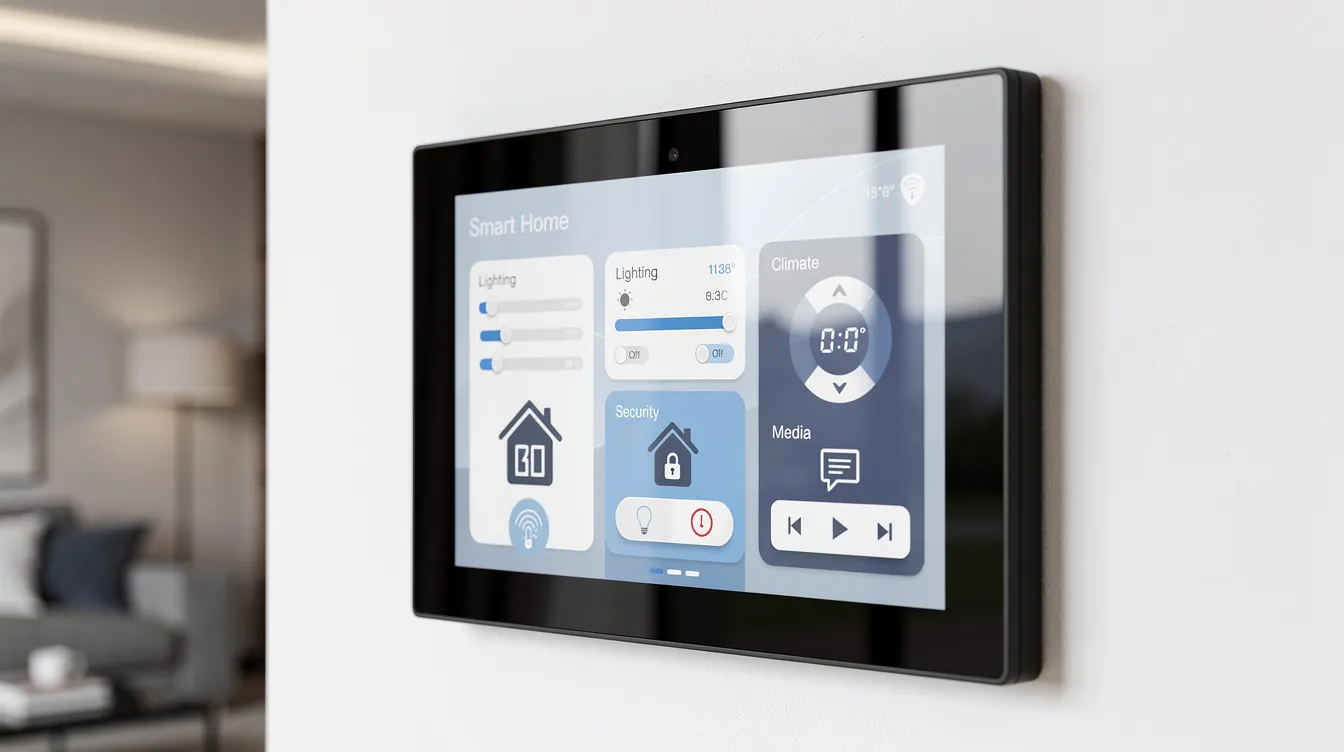
A single “Golf” scene powers the launch monitor, drops lights to correct levels, closes shades, and sets HVAC to optimal temperature and humidity. Activating this scene requires one tap or voice command—the space transforms from ambient living area to focused practice environment instantly.
A “Cinema” scene repositions audio channels for surround sound, shifts lighting to entertainment mode, and changes the content source to streaming or broadcast. The same projection screen that displays Trackman’s ball data now shows the game in 4K clarity.
D2G coordinates with home automation platforms and provides integration services directly. The simulator room folds into the whole-home control ecosystem so homeowners access everything from a tablet, in-wall touchscreen, or smartphone app.
With lighting, acoustics, and automation in place, the next section explores how these rooms can serve as multi-use entertainment suites.
From Golf Studio to Multi-Use Luxury Entertainment Suite
Multi-Functionality for Modern Families
Most luxury families want more than “just golf” from a dedicated room that occupies hundreds of square feet. The space must justify its footprint by serving multiple functions well.
D2G designs spaces that fluidly shift from Trackman practice to sports bar-style viewing, movie nights, kids’ gaming, and multi-sport simulation when supported by the chosen platform. The same room hosts morning practice sessions, afternoon gaming, and evening entertaining without compromise. Users simply select the appropriate automation scene and the room reconfigures.
Concrete Examples
- A Long Island project features a simulator that doubles as a 160-inch 4K cinema screen. During golf practice, Trackman displays ball data and virtual course imagery. During family movie night, the same screen delivers immersive cinema with surround sound. The seating, tiered platforms with comfortable lounge chairs, serves both purposes equally well. To enhance the movie theater atmosphere, the room can be equipped with a concessions area for snacks and refreshments.
- A Texas Hill Country home hosts Sunday football with a secondary video wall for stats and live betting apps alongside the primary golf display. Guests watch the game on the secondary screen while the homeowner practices putting between plays. The integrated bar behind the hitting area keeps everyone refreshed.
- When hosting events or movie nights, homeowners can offer the option to purchase tickets for exclusive movie screenings or special events held in the simulator room, creating a true cinema or event experience at home.
Seating Strategies
- Tiered platforms elevate some seating for improved sightlines during cinema viewing.
- Lounge pits behind the hitting zone create intimate social spaces without infringing on ball flight paths.
- Bar-height counters behind the hitting area enable beverage service and conversation.
- Circulation routes keep the ball flight path clear: maintain a minimum of eight feet of clearance on either side of the golfer’s centered swing path.
The world of home entertainment increasingly demands flexibility. A single carefully planned room can satisfy golfers, teenagers, and non-golfing guests alike. The investment pays dividends across multiple usage scenarios rather than sitting idle between practice sessions.
Ready to enhance your luxury home entertainment suite? Explore custom-designed golf simulators and indoor golf solutions to complete your space.
Next, discover how commercial and club-level standards can be brought into your home for a truly exclusive experience.
Commercial and Club-Level Luxury: When Your Home Feels Like a Private Club
Bringing Club Amenities Home
High-end green-grass country clubs establish a particular aesthetic and functional standard: premium materials, custom millwork, hospitality infrastructure, and professional-quality facilities. Some homeowners want to recreate that experience in their primary or vacation properties—a personal “19th hole” that rivals or exceeds what they experience at their favorite clubs.
D2G borrows from club design to achieve this result:
- Locker-style storage with personalized compartments houses equipment, shoes, and accessories.
- Wet bars with premium cabinetry, beverage refrigeration, and spirit displays enable genuine hospitality.
- Illuminated bottle displays and trophy walls celebrate the homeowner’s achievements and collections.
The result feels less like a residential bonus room and more like a members-only lounge.
Professional-Grade Features
The same design standards D2G applies to boutique golf clubs, training centers, and members-only lounges in cities like New York and Miami transfer directly to residential projects. Attention to detail in commercial settings—durable materials, sophisticated lighting, acoustic refinement, professional-grade equipment—translates into residences where homeowners expect nothing less.
Options extend to dual-bay setups for hosting events and league nights run through Trackman software. Guests compete while leaderboards display on secondary screens. Integrated cameras enable remote coaching sessions with PGA professionals: swing video streams to the instructor’s device while Trackman data provides real-time feedback. The home becomes not just a practice space but a genuine golf development facility.
With club-level amenities in mind, let’s walk through the project journey from initial consultation to your first swing.
Project Journey: From Consultation to First Swing
- Consultation
- Projects typically begin with a virtual or on-site consultation. D2G reviews the space—measurements, photos, or architectural plans—and discusses goals with the homeowner. Is this primarily for practice, entertainment, or mixed use? How often will the room host golf versus cinema versus social events? What launch monitor preferences exist? This conversation establishes feasibility, budget range, and design direction.
- Projects typically begin with a virtual or on-site consultation. D2G reviews the space—measurements, photos, or architectural plans—and discusses goals with the homeowner. Is this primarily for practice, entertainment, or mixed use? How often will the room host golf versus cinema versus social events? What launch monitor preferences exist? This conversation establishes feasibility, budget range, and design direction.
- Concept and 3D Design
- D2G produces 3D renderings, finishes concepts, and equipment layouts that show furniture, lighting, materials, and simulator components to scale. Multiple viewing angles communicate the space from different vantage points. Daytime versus nighttime renderings demonstrate lighting scenes. Material options are presented so homeowners and their interior designers can make informed selections.
- D2G produces 3D renderings, finishes concepts, and equipment layouts that show furniture, lighting, materials, and simulator components to scale. Multiple viewing angles communicate the space from different vantage points. Daytime versus nighttime renderings demonstrate lighting scenes. Material options are presented so homeowners and their interior designers can make informed selections.
- Coordination and Construction
- D2G coordinates with the general contractor and trades, delivering technical drawings, specifying blocking and power requirements, and scheduling delivery of U.S.-made components. Reflected ceiling plans, electrical diagrams, and millwork details enable seamless integration with the broader construction schedule. The firm communicates with other team members to ensure everyone understands sequencing and dependencies.
- D2G coordinates with the general contractor and trades, delivering technical drawings, specifying blocking and power requirements, and scheduling delivery of U.S.-made components. Reflected ceiling plans, electrical diagrams, and millwork details enable seamless integration with the broader construction schedule. The firm communicates with other team members to ensure everyone understands sequencing and dependencies.
- Installation and Commissioning
- D2G’s specialized crews install impact systems, wall protection, AV equipment, launch monitors (including Trackman), and automation programming. Calibration ensures the launch monitor performs accurately. Homeowner training covers operation of the launch monitor, automation scenes, and AV system. The space is ready for immediate use.
- D2G’s specialized crews install impact systems, wall protection, AV equipment, launch monitors (including Trackman), and automation programming. Calibration ensures the launch monitor performs accurately. Homeowner training covers operation of the launch monitor, automation scenes, and AV system. The space is ready for immediate use.
- Customer Success and Support
- Post-installation support includes system training, seasonal software updates, potential revisits to tune or upgrade as technology evolves, and ongoing troubleshooting. D2G maintains relationships with equipment manufacturers to ensure warranty coverage and access to expert assistance when needed.
With the project journey mapped out, it’s important to consider the investment and long-term value of a luxury golf simulator room.
Investment Considerations and Long-Term Value
Luxury simulator rooms are significant investments, often comparable to a high-end kitchen renovation or pool project. They should be evaluated with the same rigor applied to any substantial home improvement.
A golf simulator can increase the resale value of a luxury home and enhance its entertainment value.
Budget Ranges
Six-figure builds are common in New York, the Hamptons, and South Florida. Cost drivers include technology selection (Trackman versus alternatives), finish quality (standard versus premium materials), construction complexity (renovation versus new construction, acoustic treatment requirements), and automation scope (basic control versus sophisticated whole-home integration). D2G provides detailed estimates during the design phase so expectations align with reality.
Value Dimensions
Value extends across multiple dimensions:
- Personal use: Daily practice and play without travel or scheduling friction
- Family entertainment: Cinema, gaming, sports viewing in one flexible space
- Resale appeal: Distinctive amenity that sets property apart in competitive markets
- Hosting capability: Corporate entertaining, charity events, league nights
- Cost savings: Investing in a luxury home simulator room can help homeowners save both time and money compared to frequent club visits or travel, especially when taking advantage of bundled packages or special promotions that D2G may offer. For some clients, the ability to host professional or social events at home—without the logistics of club reservations—justifies the investment independently.
Future-Proofing
D2G helps align expectations by tying budget to room performance level, lifespan of materials, and flexibility for future upgrades. A well-designed room accommodates launch monitor evolution without rebuilding the space. Switching from one system to another typically requires minimal structural modification when the original architecture was properly planned.
With investment considerations in mind, let’s look at real-world examples of luxury home golf simulator rooms across the country.
Luxury Home Case Snapshots: Coast-to-Coast Projects
Representative projects demonstrate how design adapts to different cities, climates, and architectural styles.
- Manhattan / Upper East Side: A compact townhouse basement with 10’6” ceilings required precision engineering. Ceiling-mounted Trackman iO preserves floor space while delivering accurate club and ball data. Double-drywall construction with isolation clips protects neighbors from impact sounds. Dark, tailored finishes—charcoal acoustic panels, walnut cabinetry, polished concrete flooring—echo the home’s formal library aesthetic. The homeowner practices most mornings before work and hosts competitive league nights through winter months.
- Hamptons / Long Island: A renovated barn structure with 14-foot ceilings accommodates dual-bay configuration for the homeowner and spouse. White oak custom framing, cream-toned upholstered panels, and natural limestone flooring create coastal refinement. Retractable glass walls connect to an outdoor bar and terrace. The simulator doubles as a 160-inch cinema screen for summer movie nights. Friday evening golf competitions draw eight to twelve guests; the space transforms to entertainment mode for major sporting events.
- Austin / Hill Country: A contemporary estate features warm stone-and-steel aesthetic with large windows using motorized blackout shades. Reclaimed wood beams and exposed structural steel create visual interest while accommodating mechanical runs. Integrated bar seating behind the hitting area supports entertaining. A secondary video wall displays sports stats and betting apps during Sunday football. The room serves as the home’s primary hospitality venue for business and social entertaining.
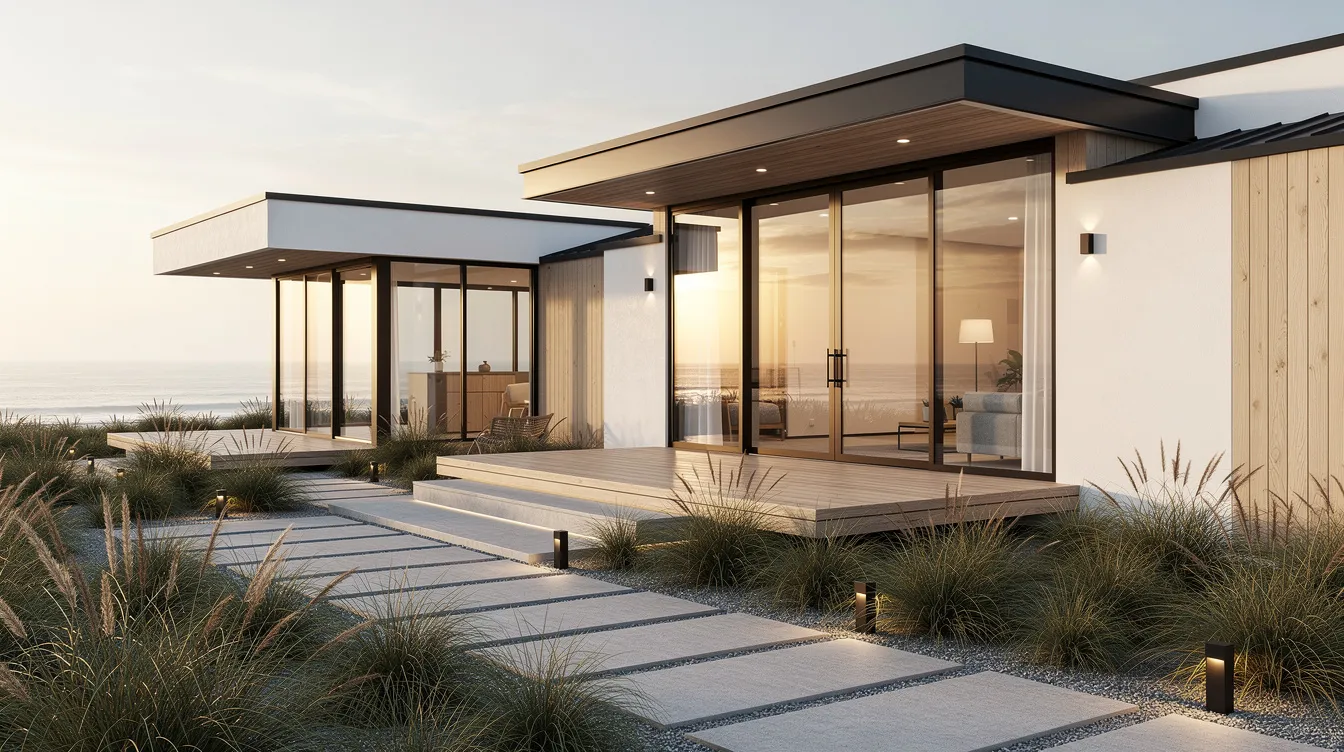
Florida (Naples / Miami): A bright, contemporary waterfront residence features large-format porcelain tile, sleek black acoustic treatments, and LED cove lighting throughout. Heavy integration with whole-home automation controls solar gain and ambient light through motorized shades. Year-round heat and humidity require robust HVAC and dehumidification. The golf room connects visually to primary entertaining spaces through glass walls, enabling spectators to watch from adjacent areas while maintaining acoustic isolation during practice.
Inspired by these case studies, the next section explains how to start your own luxury indoor golf project with Design2Golf.
How to Start Your Luxury Indoor Golf Project with Design2Golf
What to Prepare
Before consultation, gather:
- Floor plans with ceiling heights noted
- Photos of the proposed space
- Inspiration images that communicate aesthetic preferences
- A sense of how often the room will be used for golf, cinema, and other activities
This information enables productive initial conversation and accurate preliminary recommendations.
Coast-to-Coast Reach
D2G serves the most demanding markets across New York, Massachusetts, Connecticut, Texas, Colorado, Ohio, Florida and beyond. The firm’s experience with constrained urban spaces, expansive suburban estates, and distinctive regional aesthetics translates into reliable execution regardless of location.
The most beloved room in your luxury home is ready to be built. Visit the dedicated project and contact page on the Design2Golf website to discover how a carefully designed golf environment transforms underused square footage into daily value, get answers to your questions, or start your luxury home golf simulator project. Schedule a consultation with the team to begin the journey from concept to first swing. The future of your home entertainment awaits.
Introduction to Golf Simulators
Imagine stepping into a space where the world’s most famous courses are just a swing away, regardless of the weather, season, or time of day. A golf simulator brings this vision to life, transforming any room into a state-of-the-art indoor golf environment. At its core, a golf simulator is an advanced system that combines a high-precision launch monitor, immersive screen, and powerful projector to deliver an experience that rivals playing outdoors. These systems capture every detail of your swing, providing accurate club and ball data for each shot, so you can analyze your performance and refine your game with confidence.
With a luxury home golf simulator, users gain access to a vast library of legendary courses from around the world, allowing golfers to play, practice, and compete on iconic fairways without ever leaving home. The simulator’s advanced software recreates the nuances of each course, while the launch monitor tracks ball speed, spin, launch angle, and club path with remarkable accuracy. Whether you’re working on your short game, testing your skills against friends, or simply enjoying a round at Augusta or St. Andrews, the system adapts to your goals and skill level.
For homeowners and professionals alike, investing in a golf simulator means more than just convenience; it elevates practice, enhances entertainment options, and creates a dedicated space where technology and passion for the game meet. The result is an indoor golf experience that’s as rewarding as it is realistic, making every moment on the simulator an opportunity to improve, compete, and enjoy the game you love.
Now that you understand the basics of golf simulators, let’s break down the key components that make up a luxury golf simulator room.
Key Components of a Golf Simulator Room
A luxury golf simulator room is more than just a place to hit balls—it’s a meticulously engineered environment that brings the world’s most famous courses into your home. At the heart of every indoor golf experience is the launch monitor, a camera-based system that delivers precise club and ball data for every shot. This advanced technology captures the nuances of your swing, providing instant feedback on ball speed, launch angle, spin, and club path, so you can practice with the same accuracy as the pros.
The immersive experience is completed by a high-definition screen and a powerful projector, which together transform your space into a virtual window onto legendary courses around the globe. Whether you’re playing a quick nine at St. Andrews or testing your skills at Pebble Beach, the simulator software—run on a dedicated computer or device—gives you access to a vast library of courses and practice modes. Many leading golf simulator software options also offer free demo modes or introductory features, allowing you to experience the technology and explore select courses before committing to a full subscription. The hitting mat is engineered for comfort and durability, replicating the feel of real fairways and providing a stable surface for every club in your bag.
A premium golf simulator package includes all these components, seamlessly integrated to deliver a world-class indoor golf experience. The software not only enables realistic gameplay but also tracks your progress, helping you refine your game over time. With accurate ball data, immersive visuals, and intuitive controls, golfers of all skill levels can enjoy playing, practicing, and improving—no matter the weather or time of day. The result is a space where technology and design meet, offering unmatched access to the game you love, right in the comfort of your own home.
With the components in place, it’s important to consider how to maintain and support your luxury golf simulator room for years of enjoyment.
Maintenance and Support for Your Luxury Golf Simulator Room
Protecting your investment in a luxury golf simulator room means more than just enjoying the game—it requires ongoing care to ensure lasting performance and accuracy. Regular maintenance is essential to keep your indoor golf environment operating at its best. This includes updating the simulator software, so you always have access to the latest courses, features, and improvements, as well as calibrating the launch monitor to maintain the highest level of accuracy for club and ball data.
Routine cleaning of the screen, projector, and hitting mat helps preserve the immersive quality of your simulator, while periodic inspections can catch any signs of wear before they affect your experience. Environmental factors like dust or humidity can impact sensitive electronics, so it’s important to protect your equipment and maintain optimal conditions within the room.
Many luxury homeowners choose maintenance and support packages that provide scheduled updates, troubleshooting, and expert repair services. This proactive approach ensures that your simulator remains a reliable centerpiece for practice, play, and entertainment. With professional support, you can focus on your game, knowing that every detail—from software to hardware—is expertly managed.
By investing in regular maintenance, you safeguard the accuracy and immersive quality of your golf simulator, ensuring that your indoor golf experience remains as impressive as the day it was installed. The result is peace of mind and years of enjoyment, with your simulator room always ready for the next round, family gathering, or friendly competition.
With maintenance covered, let’s explore how multi-sport and entertainment options can further enhance your luxury simulator space.
Multi-Sport and Entertainment Options for the Ultimate Luxury Space
Today’s most advanced simulators are designed to do more than just perfect your golf swing: they’re engineered to transform your home into the ultimate entertainment destination. With multi-sport capabilities, these systems open up a world of interactive experiences, allowing users to enjoy everything from bowling and baseball to soccer, hockey, and even imaginative games like zombie dodgeball. The result is a dynamic space where family and friends can gather, compete, and create unforgettable memories together.
High-definition graphics and responsive gameplay immerse users in a virtual world of sports and games, making every event in your luxury simulator room feel like a front-row experience. Whether you’re hosting a birthday party, planning a family game night, or entertaining guests during a weekend gathering, the simulator adapts seamlessly to any occasion. Advanced systems let you switch between sports and activities with ease, ensuring that everyone—from avid golfers to casual gamers—finds something to enjoy.
By creating a multi-use environment, you maximize the value and versatility of your investment, turning your simulator room into a hub for fun, fitness, and connection. It’s not just about practicing your swing; it’s about building a space where the world’s best games come to life, and every event becomes an opportunity to play, laugh, and bond with those who matter most. With a luxury multi-sport simulator, your home becomes the place where entertainment and innovation meet—ready for any moment, any game, and any gathering.