
Introduction to Golf Simulators
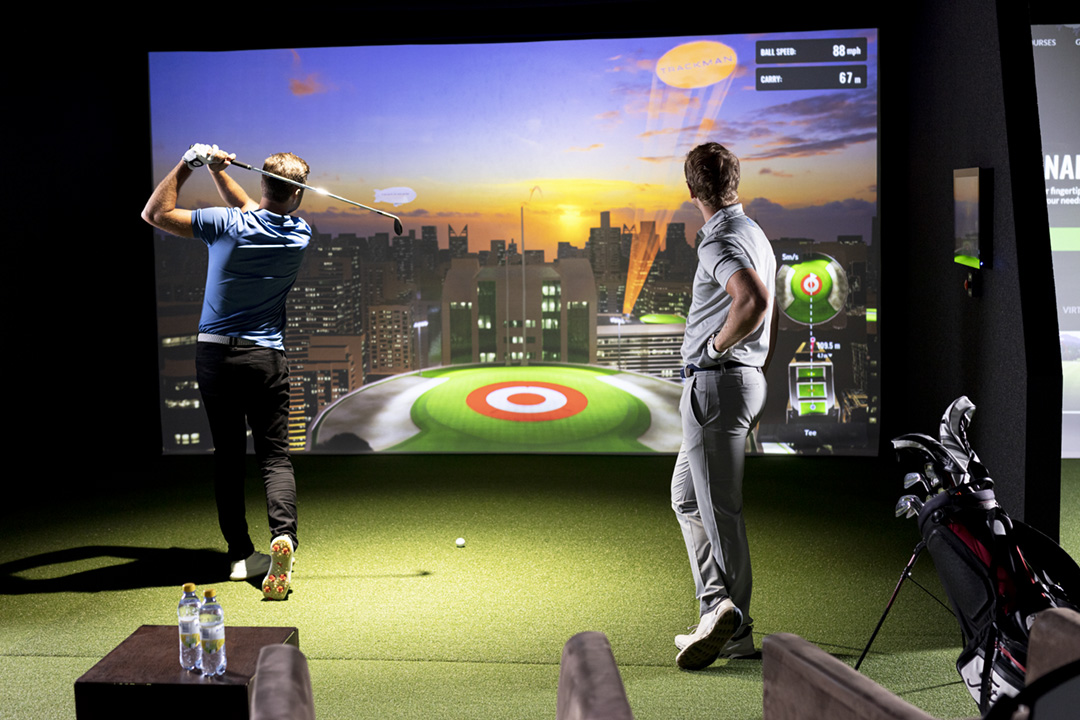
Golf simulators have transformed the way golfers approach practice, play, and performance improvement. By combining cutting-edge golf simulator technology—such as launch monitors, high-speed cameras, and advanced software—these systems deliver a virtual golf experience that rivals the real thing. This article focuses on Trackman-powered golf simulators and how they deliver a premium, data-driven golf experience.
This guide is for serious golfers, luxury homeowners, and club managers interested in Trackman-powered simulator solutions. Understanding how Trackman technology elevates the golf simulator experience helps you make informed investment decisions.
Why Golf Simulators Matter
Whether you’re teeing off at a world-famous course or working on your swing mechanics, a golf simulator allows you to track every aspect of your game in a controlled, indoor environment. With simulator technology, golfers can analyze their club path, launch angle, and ball flight in real time, using objective data to refine their technique. The integration of cameras and sensors captures every nuance of the swing, while sophisticated software provides instant feedback and detailed reports.
This makes it possible to practice year-round, play virtual rounds on iconic courses, and measure progress with precision. For both professional golfers and passionate amateurs, golf simulators offer a powerful tool to elevate their game, blending the thrill of play with the science of performance.
What is Trackman?
TrackMan uses Doppler radar to track the precise movement of balls and clubs in real time, serving as the industry standard for performance analysis in golf and baseball. TrackMan products are known for their radar-based technology, which provides unmatched accuracy for serious players seeking tour-level data quality. TrackMan is the official ball-tracking provider for Major League Baseball (MLB) and is used by every MLB organization. TrackMan technology also tracks various sports including soccer, tennis, and American football. The Trackman 4 is recognized as the gold standard for golf simulators, offering a versatile and powerful solution for both indoor and outdoor golf experiences. TrackMan allows for year-round practice using high-end indoor simulators, enabling consistent training regardless of weather or season.
Why Trackman Matters for Serious Golfers and Luxury Homes
Trackman launched in 2003 when Danish engineers adapted doppler radar technology—originally built to track missiles—into the gold standard for measuring golf ball and club movement. Today, Trackman powers real-time data on the PGA Tour, LPGA, and DP World Tour, capturing over 51 data points per swing with sub-millisecond precision.
Design2Golf (D2G) specializes in transforming dedicated rooms into Trackman-powered performance studios and luxury entertainment spaces for affluent homeowners and private clubs. When professional golfers rely on specific technology to refine their game, that same objective data becomes available in your home—complete with cinema-quality AV, seamless automation, and multi-sport capabilities the whole family can enjoy.
This article provides a full breakdown of how Trackman technology works indoors, how D2G integrates it into complete simulator environments, and why the combination of precision data and luxury design creates the ultimate golf experience.
Trackman Technology 101: How It Actually Works Indoors
Trackman Technology Overview
TrackMan uses Doppler radar to track the precise movement of balls and clubs in real time. Its dual radar technology monitors the 3D characteristics of a ball and sports equipment in motion. TrackMan tracks a ball’s entire flight for up to six seconds, providing actual measured data compared to systems that estimate ball flight based on initial launch. TrackMan provides over 51 data points on club data and ball flight, including speed, launch angle, and spin rate.
Radar and Camera Integration
Trackman’s precision comes from dual-radar systems that track both club and ball data simultaneously. The Trackman 4 uses two synchronized radar units—one focused on club path and impact, the other following ball flight—while Optically Enhanced Radar Tracking (OERT) adds high speed cameras for visual validation.
How radar captures your golf shot:
- Doppler radar measures velocity, spin rate, and curvature by analyzing wave shifts as the golf ball moves through space.
- Data capture happens within milliseconds after impact—before the ball even reaches the screen.
- The system tracks the entire ball flight from launch to landing rather than projecting estimates.
Indoor Setup Options
Indoor setups typically use either Trackman 4 in “Indoor Mode” (floor-placed behind the golfer) or the Trackman iO (ceiling-mounted, purpose-built for indoor simulators). Both deliver consistent raw data, but mounting, space requirements, and calibration differ significantly.
Key Performance Metrics
Key performance metrics Trackman provides:
| Club Data | Ball Data |
|---|---|
| Club speed | Ball speed |
| Face angle | Launch angle |
| Club path | Spin rate |
| Attack angle | Carry distance |
| Dynamic loft | Total distance |
| D2G’s PGA professionals configure data layouts so everyday golfers see simplified distance readouts, while serious golfers access comprehensive swing data for deep analysis. |
From Launch Monitor to Simulator: Trackman in a Complete D2G Studio
Physical Components
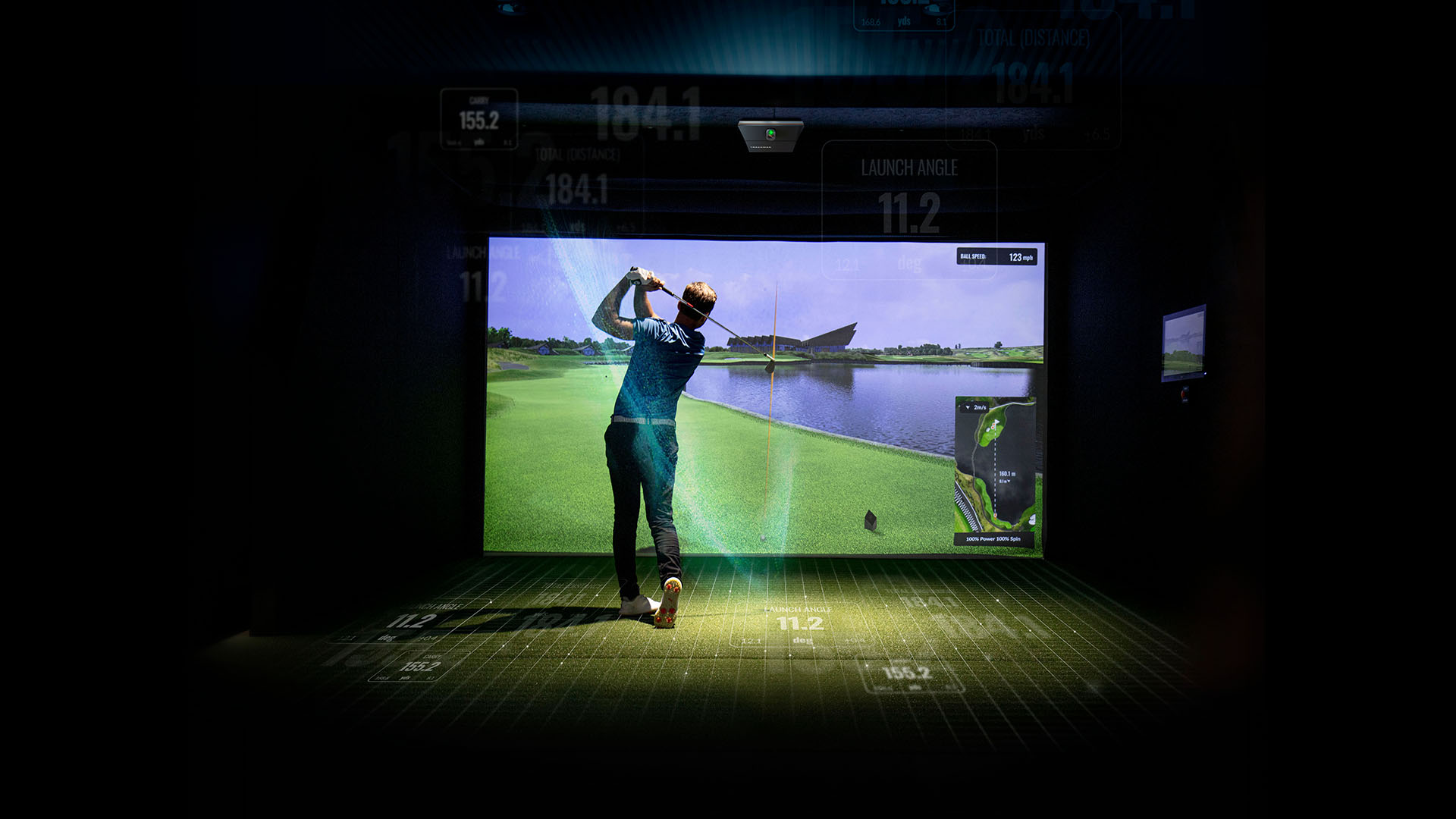
A launch monitor on a driving range mat gives you numbers. A fully integrated D2G Trackman room gives you an experience—one that feels like playing Pebble Beach in January.
Trackman Virtual Golf 3 (VG3) software renders photorealistic 4K courses and ranges, transforming ball data into immersive virtual golf rounds across 300+ courses. D2G designs every element around this experience:
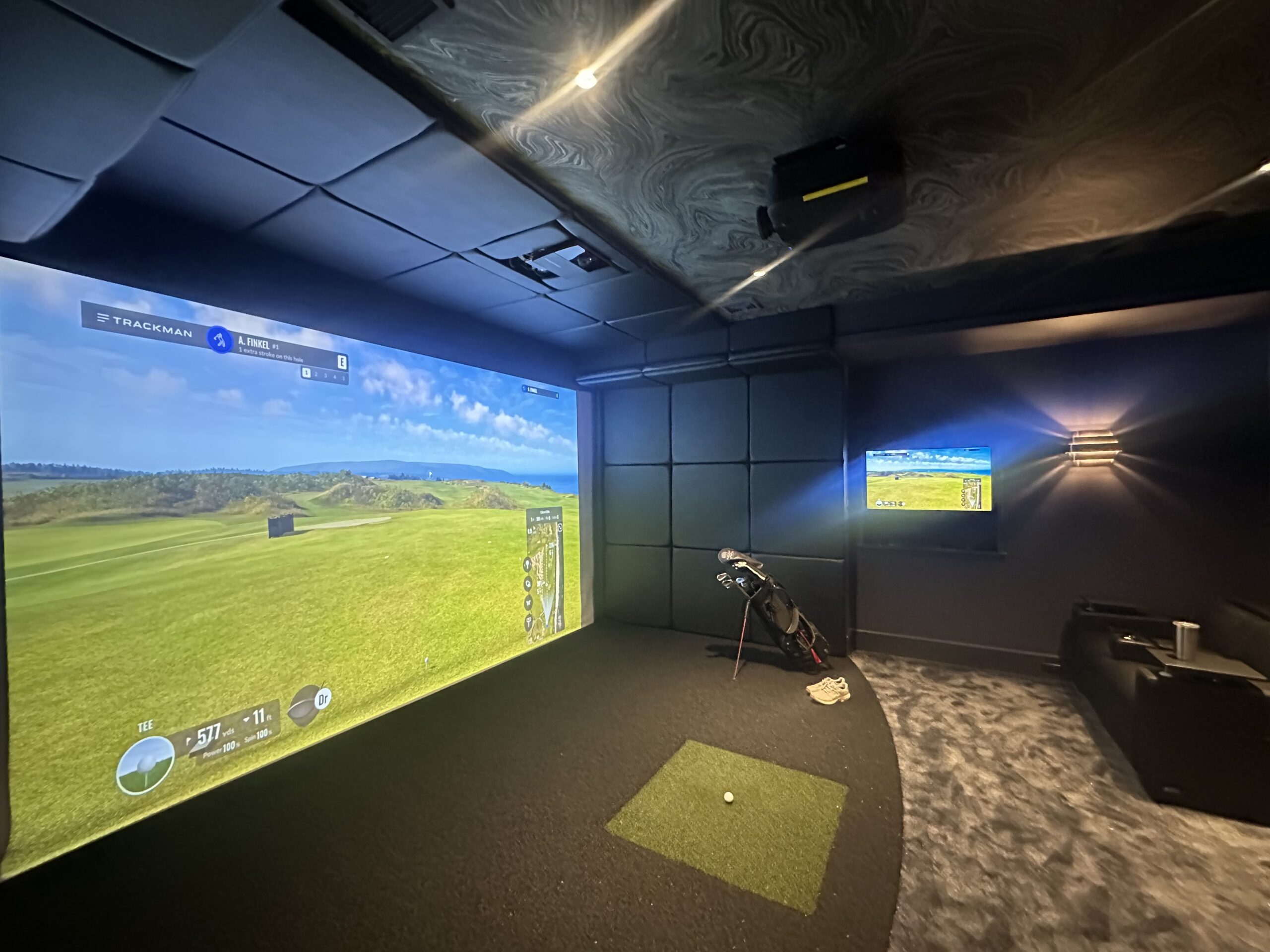
- Impact screen: Typically 12-16 feet wide for full swings
- Enclosure: Structural containment for errant shots
- Ultra-short-throw projector: Mounted to avoid swing path interference
- Hitting mat/stance platform: Turf variations mimicking real lies
- High-performance gaming PC: Enterprise-grade hardware minimizing latency to 10-20ms
- Acoustic treatment: Panels and underlayment dampening impact noise
Practice Modes
D2G configures multiple practice modes—Combine tests mirroring tour-standard challenges, wedge gapping for precise yardage mapping, driver optimization, and family-friendly games like nearest-the-pin competitions.
Launch Monitor Only: Data readouts, no visuals, range-mat feel
Trackman Simulator by D2G: Immersive AV, automation, multi-use entertainment, 2-3x more practice value per session
Now that you know how a Trackman simulator room is built, let’s compare the two leading Trackman models for different spaces.
Trackman 4 vs Trackman iO: Choosing the Right Engine for Your Space
Both are premium Trackman products delivering 99%+ accuracy across 50+ metrics, but they serve different environments.
| Use Case | Trackman 4 | Trackman iO |
|---|---|---|
| Portable tour practice | ✓ Excellent | — |
| Indoor/outdoor flexibility | ✓ Excellent | Indoor only |
| Compact home simulator | Workable | ✓ Optimized |
| No floor unit preferred | — | ✓ Ceiling mount |
| Enclosed precision | Good | ✓ Excellent |
| D2G assesses your space via architectural plans or site surveys, matching Trackman model to your goals—whether that’s tour-level dual-use practice or a dedicated indoor game and entertainment hub. |
Trackman 4 Characteristics
- Dual radar plus optional camera via OERT
- Portable orange unit placed behind the golfer
- Ideal for indoor/outdoor dual-use (tour ranges, fitting studios)
- Requires 16-18 feet depth, 10 feet width, 9-10 feet ceiling height
- Supplemental lighting often needed for optimal OERT performance
Trackman iO Characteristics
- Ceiling-mounted configuration using radar, infrared, and high-speed imaging
- Purpose-built for indoor simulators with no floor obstruction
- Optimized for compact luxury rooms
- Requires approximately 12-14 feet depth, 9-10 feet width, 9 feet height
- Ideal for dedicated spaces where aesthetics prioritize seamless integration
With the right Trackman model selected, the next step is integrating it into a luxury space with precision design and construction.
Precision Data Meets Design: How D2G Builds Trackman Rooms
Accurate Trackman data is only as good as the room layout, build quality, and AV integration surrounding it. A poorly leveled stance platform or suboptimal lighting compromises even the best golf simulator technology.
D2G’s End-to-End Process
- Concept design with 3D room modeling
- Construction coordination with builders for structural reinforcements
- Trackman and AV installation
- Final calibration with a PGA professional on-site
Structural and Safety Considerations
- Stance platform levelness within 1/8-inch tolerance (critical for accurate attack angle)
- Ceiling protection nets and wall padding against topped shots
- Enclosure depth of 14+ feet for full follow-through
- Projector mounting that avoids swing paths
- Concealed cabling and HVAC ventilation preventing overheating during extended sessions
D2G integrates Trackman with force plates and multi-angle swing cameras for high-end coaching setups. Acoustic engineering—bass traps, diffusers, door seals—reduces noise by 30-40dB so full-speed swings don’t disturb the rest of your home.
We work directly with builders, interior designers, and AV contractors to ensure finishes, lighting, and simulator technology are cohesive and luxury-grade.
Golf Club Selection
Choosing the right golf club is essential for maximizing performance, and today’s golf simulator technology makes this process more precise than ever. By leveraging launch monitors, force plates, and advanced analytics, golfers can gather detailed data on ball flight, spin rate, and carry distance for every club in their bag. This wealth of information allows players to test and compare different golf clubs in a controlled environment, ensuring optimal selection for each shot and playing condition.
Force plates add another layer of insight by analyzing swing dynamics, such as club head speed and strike efficiency, helping golfers understand how their technique interacts with various clubs. With simulator technology, golfers can simulate on-course scenarios, experiment with different setups, and make data-driven decisions that translate to better results on the course. Whether you’re fine-tuning your set for competition or simply seeking more consistency, the right tools and data make club selection a science, not a guess.
Once you’ve dialed in your club selection, you can take your performance analysis to the next level with advanced tools like force plates and swing cameras.
Building a Performance Lab: Force Plates, Swing Cameras, and Trackman
Many D2G clients want more than shot distance—they want tour-caliber biomechanics for instruction, club fitting, and speed training. This is where force plates work alongside Trackman to measure human movement patterns that drive power.
Dual force plates capture ground reaction force in vertical and horizontal axes, generating a force time curve that reveals:
- Peak force during the swing
- Rate-of-force development (typically 2-5x bodyweight spikes in professional golfers)
- Center-of-pressure shifts correlating with club speed and club path
A common force plate test like the countermovement jump establishes baseline athletic power, while swing-specific protocols identify asymmetries that limit performance or risk injury. Tools like the Forcedecks app help coaches interpret force data alongside Trackman metrics.
D2G integrates multi-camera swing capture (face-on, down-the-line, overhead via camera based systems) synchronized with ball data for frame-accurate analysis. Our PGA staff designs workflow presets—warm-up screens, combine testing layouts, gapping sessions, junior development programs—tailored to skill levels from beginners to scratch players.
All complexity—wiring, servers, strain gauge sensors, capture units—hides behind clean finishes, while coaches and serious golfers access deep data when needed.
With these advanced tools in place, understanding the force-time curve becomes essential for maximizing swing efficiency and power.
The Importance of Force Time Curve
The force-time curve is a foundational element in understanding how golfers generate power and efficiency during the swing. Captured through force plates, this curve maps the ground reaction force a golfer produces over the course of their movement, offering a window into the timing and magnitude of force application. By analyzing the force-time curve, coaches and golfers can pinpoint opportunities to increase swing power, improve weight transfer, and optimize overall performance.
In golf simulator environments, force plates work alongside launch monitors and other simulator technology to provide a comprehensive view of a golfer’s biomechanics. Tests like the countermovement jump are commonly used to assess explosive power, while swing-specific force data reveals how effectively a golfer uses the ground to generate club speed. This objective data empowers golfers and coaches to make targeted adjustments, ensuring every swing is as efficient and powerful as possible. The force-time curve is not just a measurement—it’s a roadmap to unlocking greater performance on the course.
With a solid understanding of performance analysis, let’s look at how Trackman-powered rooms can serve as versatile entertainment spaces for the whole family.
Beyond Golf: Cinema, Multi-Sport, and Family Entertainment
Reframe your Trackman room as a multi-purpose luxury media and sports space rather than a single-use golf cave.
D2G’s dual-mode concepts feature motorized roll-up impact screens that reveal dedicated cinema displays—Sony 4K projectors or Samsung microLED walls—for streaming, sports broadcasts, and family movie nights.
Room automation via Control4 or Crestron enables one-touch scenes:
- “Practice”: Impact screen drops, hitting lights activate, Trackman launches
- “Family Game Night”: Interactive soccer or baseball titles load on the same bay
- “Movie Night”: Screen retracts, Dolby Atmos audio engages, ambient lighting dims
- “Watch the Masters”: Sports broadcast fills the display with stadium sound
This versatility means families log 2-3x the usage versus golf-only spaces, dramatically increasing ROI.
Two vignettes:
Weekday evening: A low-handicap executive runs a 30-minute session analyzing face angle deviations on virtual St. Andrews, tracking swing data and working through a wedge gapping protocol before dinner.
Saturday afternoon: The same room hosts kids’ birthday party games—Topgolf-style closest-to-pin challenges, interactive soccer, then streaming a movie—all without moving furniture or switching rooms.
With multi-use entertainment covered, let’s see how Trackman solutions scale for private clubs and commercial venues.
Trackman for Private Clubs and Commercial Venues
Trackman 360 and Trackman Range solutions are transforming golf clubs, academies, and indoor centers worldwide—turning seasonal facilities into year-round revenue generators.
D2G designs multi-bay Trackman facilities with:
- Central control rooms and shared server infrastructure
- Member login experiences via the Trackman app
- Data-driven coaching programs tracking progress across sessions
- League play, social competitions, and special events
Business tools and revenue models:
- Bay rentals: $40-60/hour
- Premium lessons: $150+/hour
- Memberships, events, corporate outings
Northern clubs achieve 80% winter utilization with indoor simulators. Resorts offset rain days with 500+ annual rounds per bay. D2G helps model capacity and ROI—expected rounds, pricing tiers, scheduling—while ensuring the space maintains a premium club environment with lounge seating, bar areas, and elegant check-in experiences.
If you’re considering a Trackman project, here’s how to work with Design2Golf from start to finish.
Working With Design2Golf on a Trackman Project
D2G is a specialized design-build partner focused on high-end residential and private-club golf simulator installations—not a generic online reseller shipping boxes.
Typical engagement steps:
- Discovery call to understand goals and timeline
- Space assessment via drawings or site visit
- Conceptual design with budget range ($100k-$300k+ residential tiers)
- Detailed engineering documentation
- Construction coordination with your builder
- Final commissioning and PGA-led calibration
We coordinate with architects, interior designers, and general contractors early in the project—ideally before framing—to avoid ceiling height or layout surprises that compromise Trackman performance.
D2G’s team includes PGA members and experienced AV/automation engineers who speak both “golf” and “technology” fluently. We understand that a 3-handicap homeowner wants different data views than their spouse who plays twice a year, and we configure the system accordingly.
With the process outlined, let’s look ahead at the future of golf simulators and the value of investing in Trackman technology.
The Future of Golf Simulators
The future of golf simulators is poised to be more immersive, intelligent, and accessible than ever before. As technology continues to advance, the integration of artificial intelligence, machine learning, and virtual reality will redefine the ultimate golf experience. High-speed cameras, Doppler radar, and sophisticated sensors will deliver even more accurate swing and ball data, while next-generation software will provide deeper insights and personalized coaching.
Professional golfers and amateurs alike will benefit from these innovations, gaining access to tools that analyze every aspect of their game with unprecedented detail. Virtual golf tournaments, online coaching platforms, and interactive instruction will make it easier for golfers around the world to connect, compete, and improve. As simulator technology evolves, it will become an indispensable part of the modern golfer’s toolkit—offering not just a way to practice, but a gateway to a new era of performance, entertainment, and community in the game of golf.
Investment, Value, and Long-Term Support
Trackman technology is a premium investment. The room’s build quality and integration determine whether that investment delivers satisfaction for years or frustration within months.
Approximate investment ranges:
| Project Type | Typical Range |
|---|---|
| Luxury residential Trackman studio | $80–$100k |
| Multi-bay club installation (4-6 bays) | $400k–$1M+ |
| Factors influencing cost: |
- Trackman model (4 vs iO, with iO at ~$40k+)
- Room size and structural modifications
- Automation depth (Control4, Crestron integration)
- Cinema upgrades (8K, microLED)
- Force plates ($10k-$20k) and swing cameras
- Custom finishes and acoustic treatment
D2G provides long-term support: software updates, annual recalibrations (addressing 2-5% accuracy drift after moves or settling), hardware upgrades, and periodic technology refreshes as standards evolve from 4K to 8K and beyond.
The value compounds: 300+ annual home rounds (equivalent to $15k+ in saved greens fees), family engagement across skill levels, enhanced property appeal, and—for clubs—15-25% improvement in membership retention.
Technology continues advancing rapidly in the early days of mainstream indoor golf adoption. D2G ensures your space evolves with it through thoughtful design and ongoing partnership—so your Trackman room remains the ultimate golf experience for decades, not just seasons.